
Updated 20 August 2026. Originally published January 2024, rewritten to make clear that the airdrop snapshot closed at the May 2023 fork and to correct how PulseChain's token supply relates to its fees.
PulseChain is a full-state fork of Ethereum, and its launch produced one of the largest token distributions in crypto — a distribution that happened exactly once, at the fork block in May 2023, and has never repeated.
If you held ERC20 tokens in a wallet you controlled at that moment, PRC20 copies of them exist at the same address on PulseChain right now. There was nothing to claim then and there is nothing to claim today. Which raises the more useful question for 2026: what is a PRC20 copy actually worth, and how does it differ from the ERC20 original you still hold on Ethereum?
Understanding PulseChain: a full-state fork of Ethereum
PulseChain replicated the state of the Ethereum blockchain — contracts, balances, tokens and all — onto a separate network. Older articles (including the first version of this one) called it a fork of "Ethereum 2.0"; that term was dropped by the Ethereum Foundation in January 2022 in favour of "execution layer" and "consensus layer". PulseChain is a fork of Ethereum.
Its native token supply is many orders of magnitude larger than Ethereum's, and the network targets very low transaction costs. Those are two separate facts that often get merged into one. Supply size does not by itself make a chain cheap — what a transaction costs depends on block space, demand and the fee market. The very large supply does mean fees are denominated in tiny fractional amounts of PLS.
It is also worth being precise about what PulseChain inherits: Ethereum's code and Ethereum's state, not Ethereum's validator set, security budget or decentralisation. It is its own network with its own assumptions.
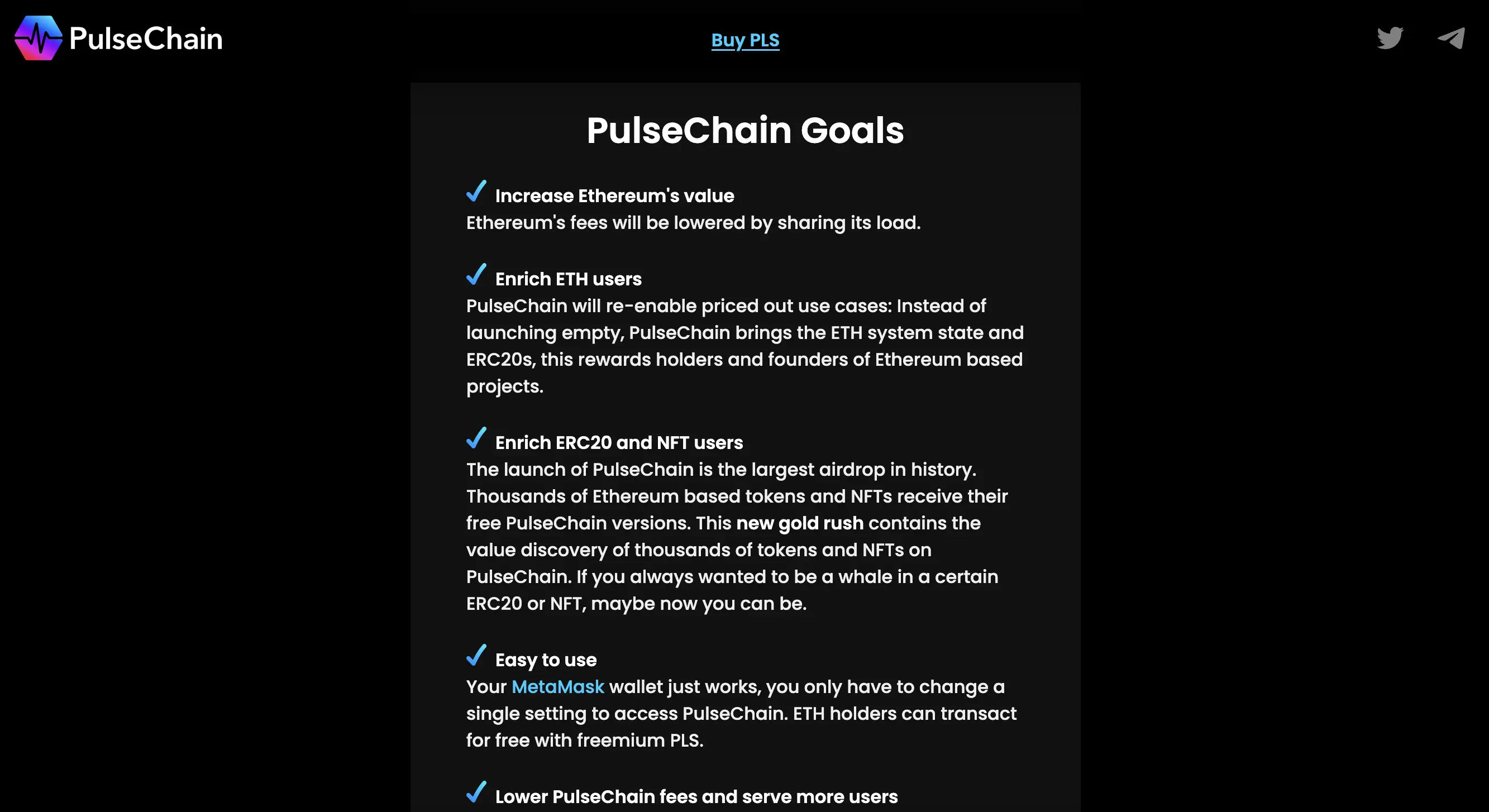
Screenshot from January 2024.
The airdrop: a one-time event, not a standing feature
An earlier version of this article described the airdrop as "not just a one-time event but a foundational feature". That was wrong, and it is worth correcting plainly: it was a one-time event. The state copy was taken once, at the fork block. It gave the new network an instant user base and an instant token universe, and then it was done.
What that means in practice:
- Holding ERC20 tokens today does not generate PRC20 copies. The snapshot has been taken.
- Tokens sitting on a centralised exchange at the fork were copied to the exchange's address, not yours.
- The copies made in 2023 have not gone anywhere. They sit at the same addresses, waiting to be noticed.
The interesting angle, three years on, is discovery rather than eligibility. If you were self-custodying ERC20s in May 2023, you can check the address and see what came across.
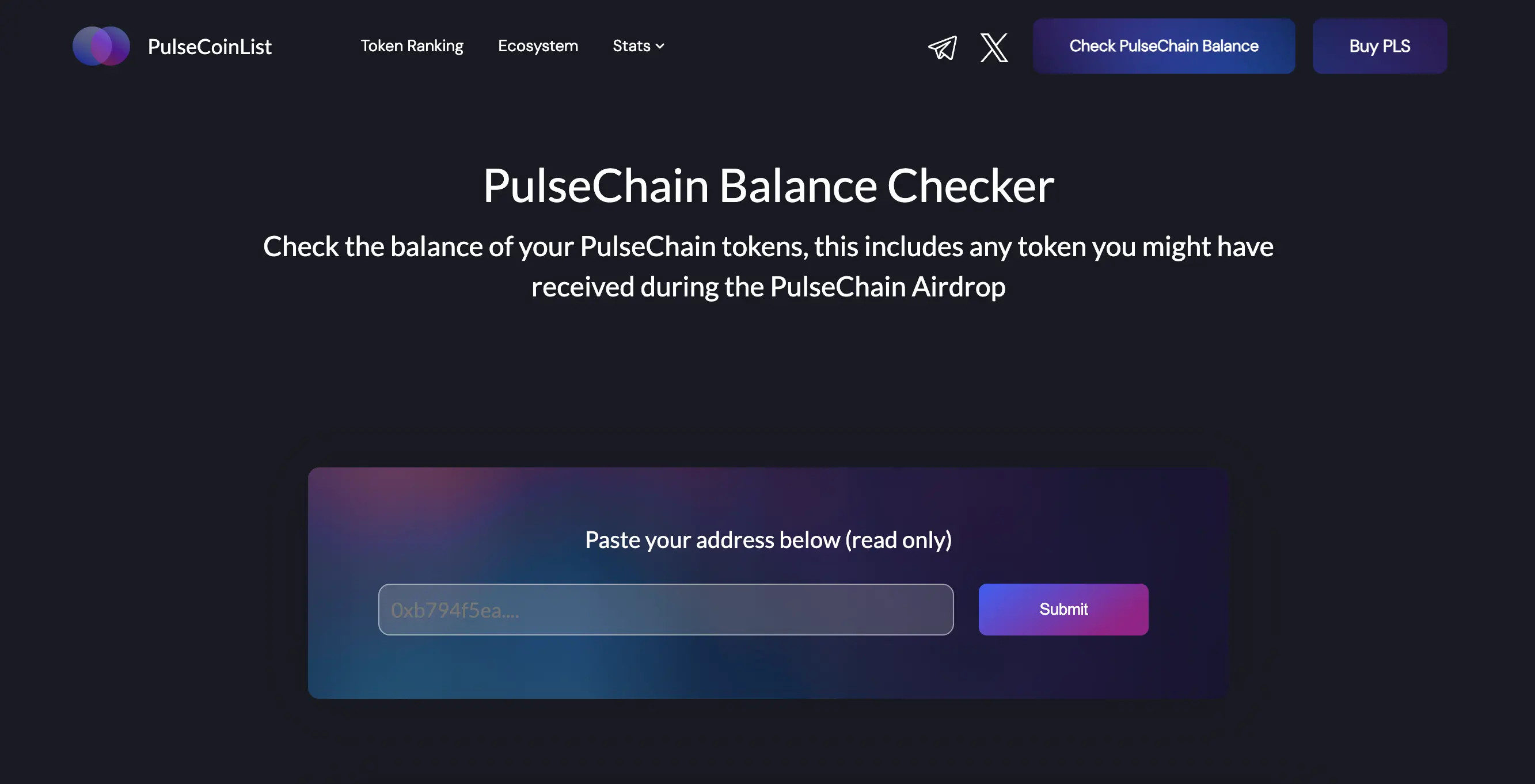
Screenshot from January 2024 — the interface has changed since.
ERC20 vs PRC20: what's the same, what isn't
The same: a PRC20 copy carries over the original's name, ticker, decimals and contract address. On paper it looks identical, because it is a copy of the same contract state.
Not the same:
- They are different assets on different chains. A PRC20 token is not redeemable for its ERC20 original and does not convert into it. The two trade separately and price separately.
- The project behind the token owes the copy nothing. Most Ethereum teams never adopted, supported or acknowledged their PulseChain-side copy. A copied stablecoin contract, for instance, is not backed by the issuer's reserves — the issuer only honours the token on the chain it actually issued on.
- Liquidity is entirely separate. A copy has a meaningful price only where someone has made a market for it on PulseChain. Many copies have thin liquidity or none at all.
- Value can diverge enormously in either direction. That divergence is the whole reason a comparison tool exists.
That last point is the practical takeaway: the label on a PRC20 token tells you what it was copied from, not what it is worth.
Comparing ERC20 and PRC20 side by side
For a direct read on how a token's Ethereum and PulseChain versions are performing against each other, PulseCoinList's comparison tool puts the two side by side with live data, so you can see where a copy has developed its own market and where it has not.
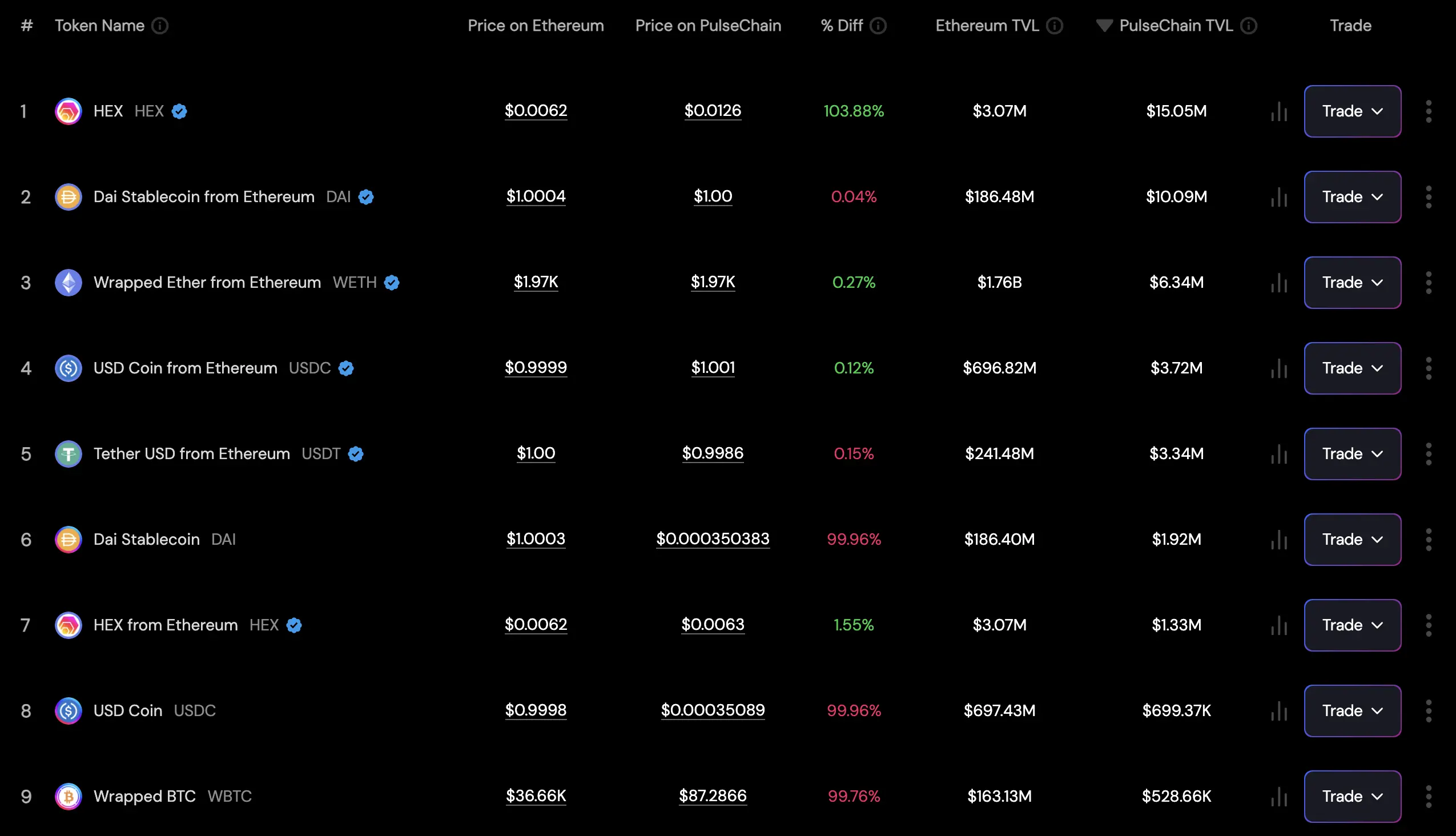
Screenshot from January 2024 — the interface has changed since.
The large supply and the low-fee goal
PulseChain's decision to launch with a vastly larger native supply than Ethereum's is often explained as the reason its fees are low. It is more accurate to say low fees are a design goal of the network, pursued through its own fee market and block space, and that the supply choice affects the units fees are quoted in rather than being the cause of cheap transactions.
The user-facing result is what most people care about: moving tokens on PulseChain costs a small fraction of what the equivalent action costs on Ethereum mainnet, which makes exploring a wallet full of copied tokens practical in a way it would not be on Ethereum.
Keeping an eye on the PulseChain price
For live prices, market stats and the wider ecosystem picture, PulseCoinList is the reference point.
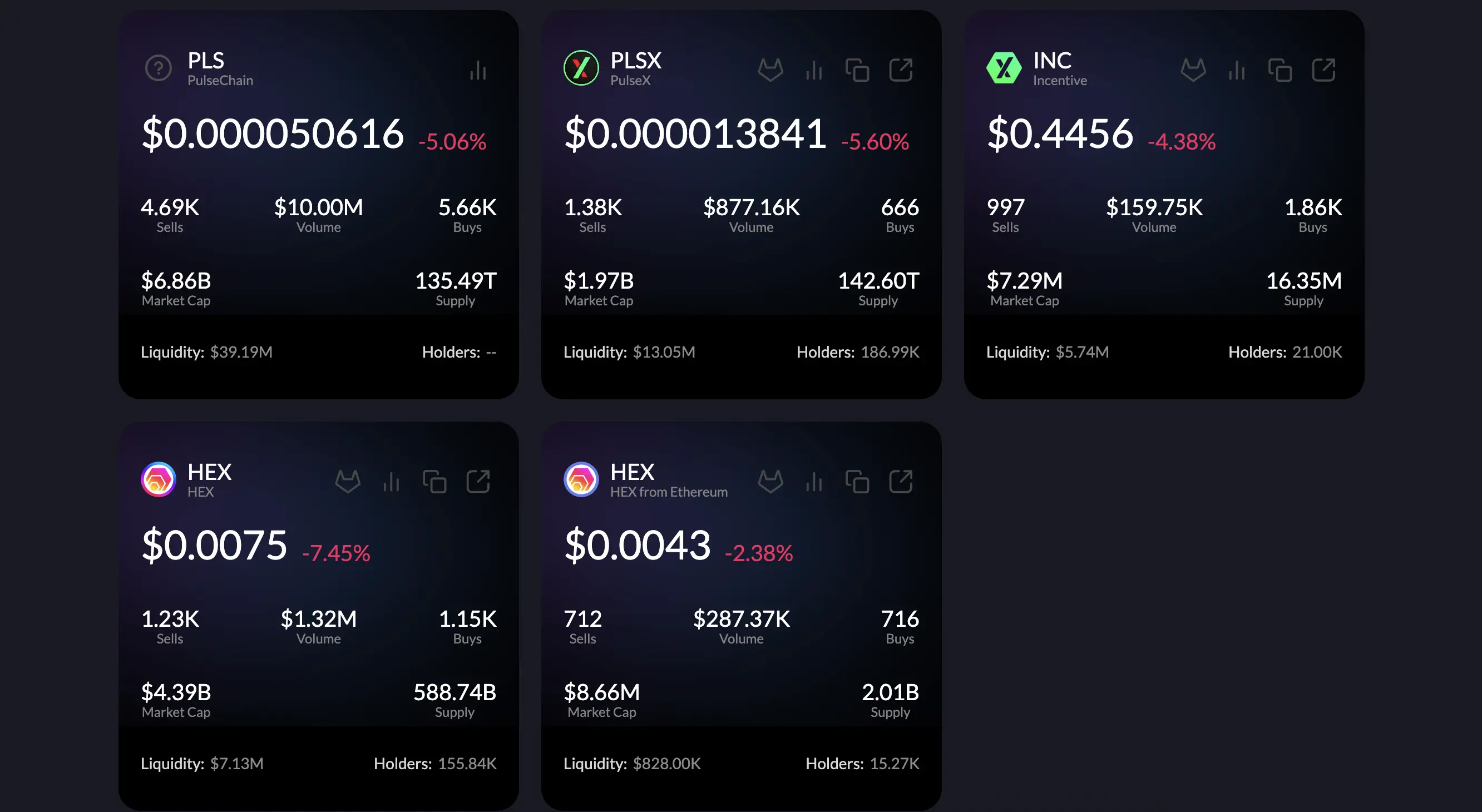
Screenshot from January 2024 — prices shown are historical.
Conclusion
The ERC20-to-PRC20 copy was a single, unrepeatable event, and treating it as anything else has misled a lot of readers over the years. What it left behind is real, though: balances at addresses, some worth checking, some worth very little. Find out which you have with the balance checker, then use the comparison tool to see how the copy is priced against the original.