
Updated 20 August 2026. This article was written in November 2023, six months after PulseChain's launch. It has been rewritten as a retrospective: the figures below are dated to when they were reported and should be read as a record of that moment, not as current network statistics. For live numbers, see PulseCoinList.
The launch of PulseChain
PulseChain went live on 13 May 2023. It was launched by Richard Heart, who had previously created HEX — a token he marketed as a "blockchain certificate of deposit".
In the six months that followed, the network drew an average of around 10,000 daily active users, as reported in November 2023. The original version of this article, written at that point, called PulseChain the most active blockchain from its debut. That was a snapshot of late 2023 taken from the activity charts of the time — it was never a permanent title, and it should not be read as one today.
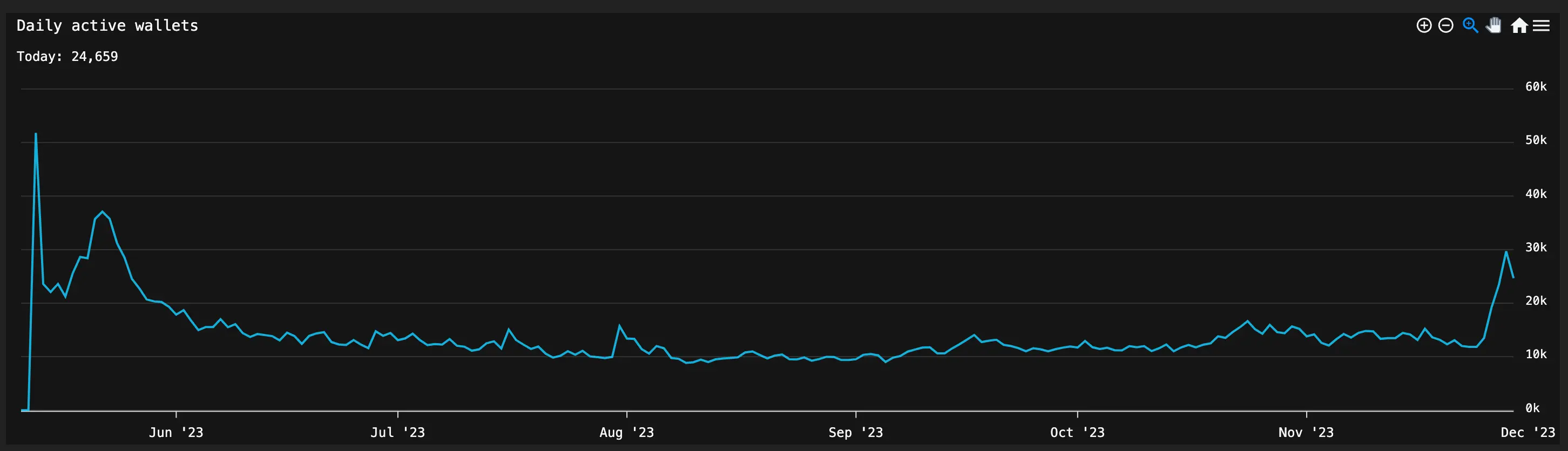
Chart as of November 2023.
By November 2023 the network was reported to have more than 51,000 validators — a large set for a chain six months old, though validator counts on their own say little about how decentralised a network actually is. Validators can still be activated through the PulseChain launchpad.
One thing that was genuinely unusual about the early period: PulseChain launched without a grant programme. Whatever got built in those first months was funded by the people building it.

Community dynamics and early project launches
The early ecosystem was community-driven, and it grew quickly. By November 2023 roughly 180 projects had launched on the network — a figure that belongs to that date; the ecosystem directory carries the current list.
One of the notable early arrivals was Fetch, PulseChain's first native oracle service. When this article was first written the launch was still ahead; Fetch shipped, and the service has been running since.
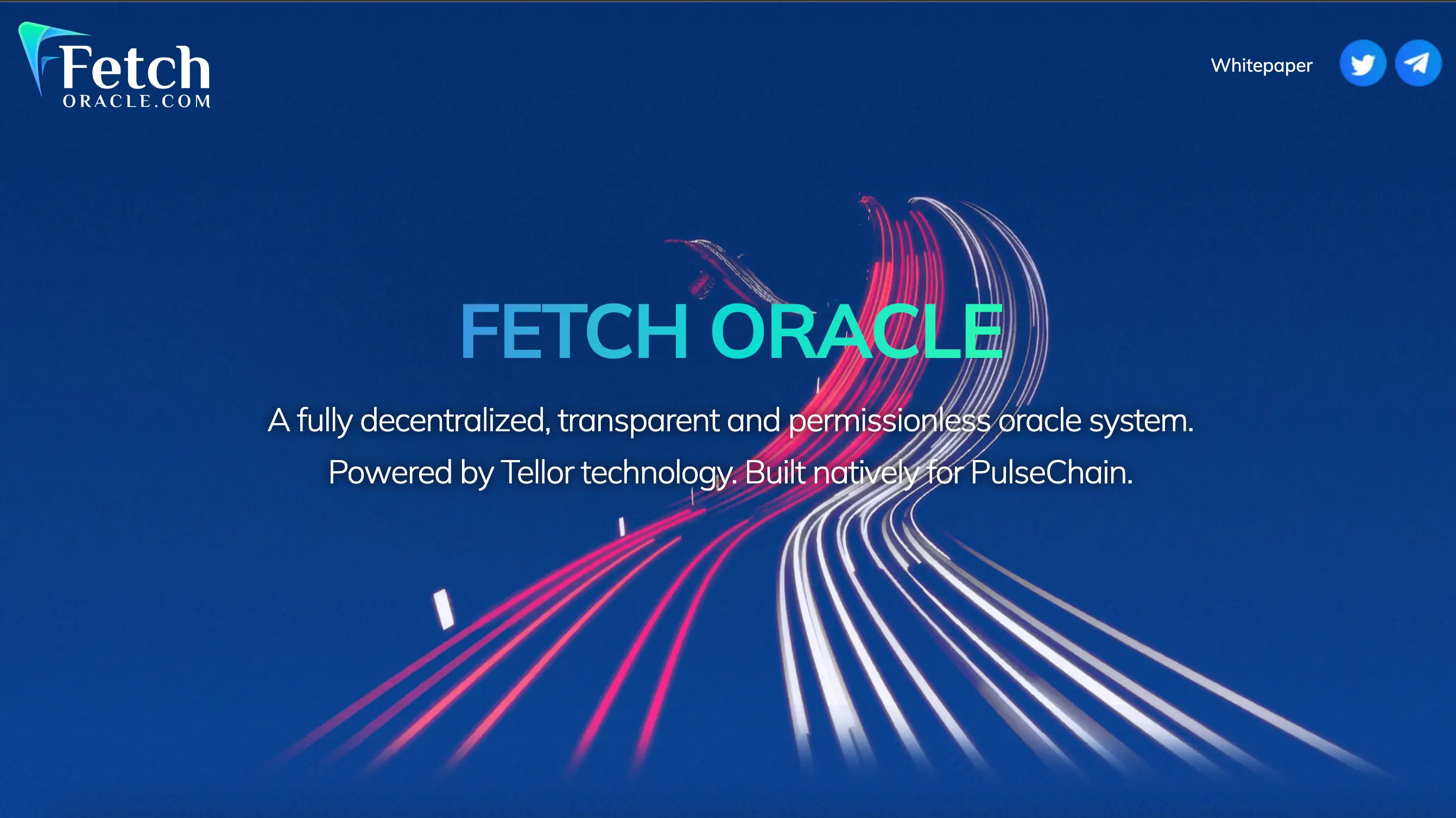
Screenshot from November 2023.
The early financial ecosystem
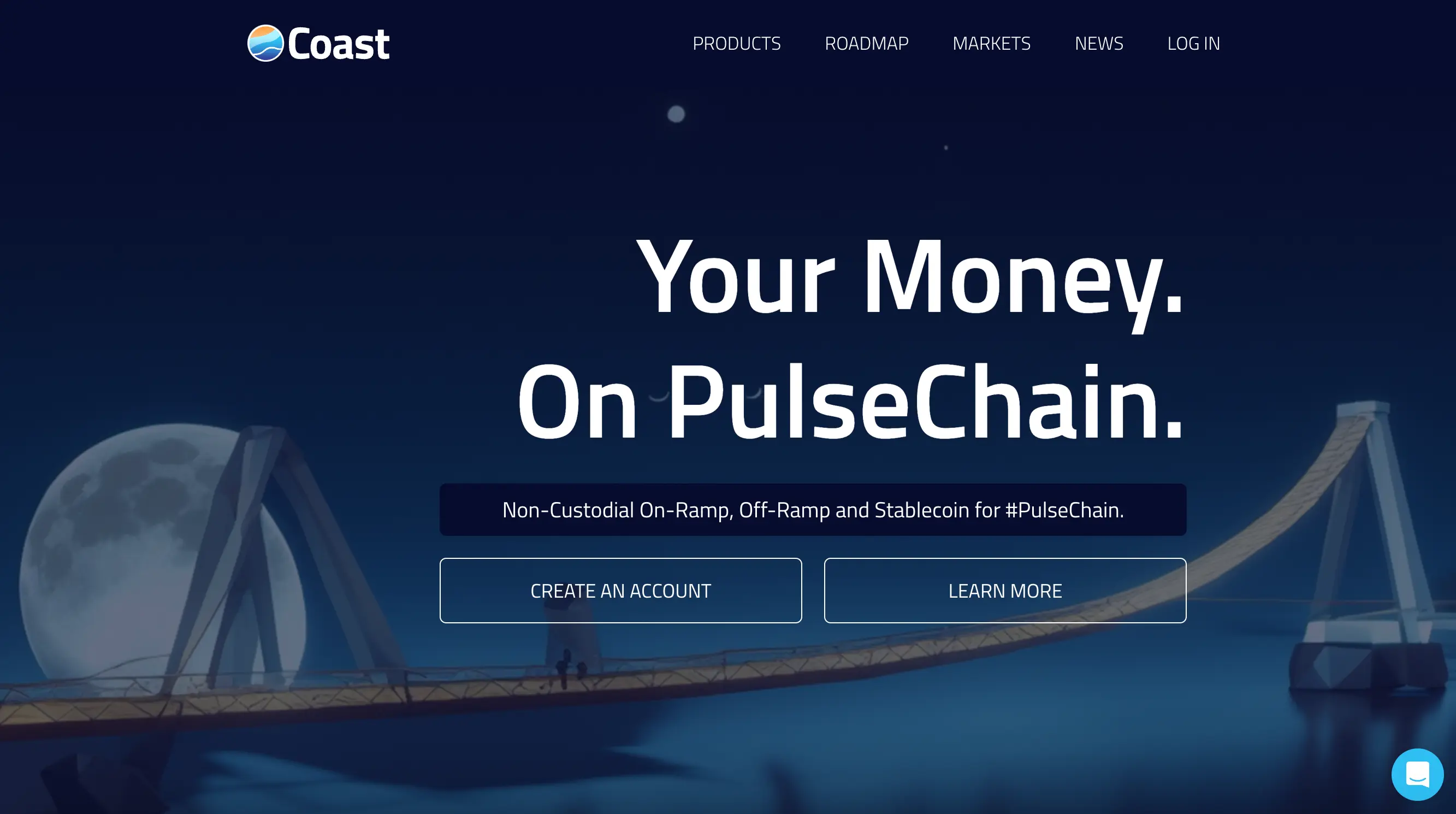
PulseChain's first native stablecoin was CST, which aims to maintain a value of $1 USD. As with any stablecoin, that is a design objective rather than a guarantee — the mechanism, the collateral behind it and the redemption path are what determine whether the peg holds, and those are worth checking for yourself before relying on one.
Two further native stablecoins were planned as of late 2023.
Screenshot from November 2023.
Technical design and transaction costs
Technically, PulseChain's pitch was straightforward: an EVM chain running Ethereum's code with a large validator set, low transaction fees and enough block space to avoid the congestion that made Ethereum mainnet expensive to use for small transactions.
That last point is the one that has mattered most to ordinary users. Moving tokens, testing a contract or trying a new dApp on PulseChain costs a tiny fraction of what the same action costs on Ethereum mainnet — which lowers the cost of experimenting, and shows up directly in the activity numbers of the early period.
Lowering the barrier to entry
The accessibility argument for PulseChain in its early period was narrow but real: because fees are small, the cost of a beginner's first mistake is small too. For people who found Ethereum mainnet's fees prohibitive, that made the network a cheaper place to learn — and a cheaper place for a new project to deploy and iterate.
A wider place in the crypto ecosystem
PulseChain's arrival added another high-throughput, low-fee EVM chain to a market that was already competing hard on exactly those terms. Its distinguishing feature was never the fee level on its own — it was the state copy.

The community behind the launch
The size of the community was a real factor in how quickly the chain filled up with projects. By late 2023 PulseChain's community channels counted their membership in the hundreds of thousands, and that reach is what gave early projects an audience on day one rather than after a marketing campaign.
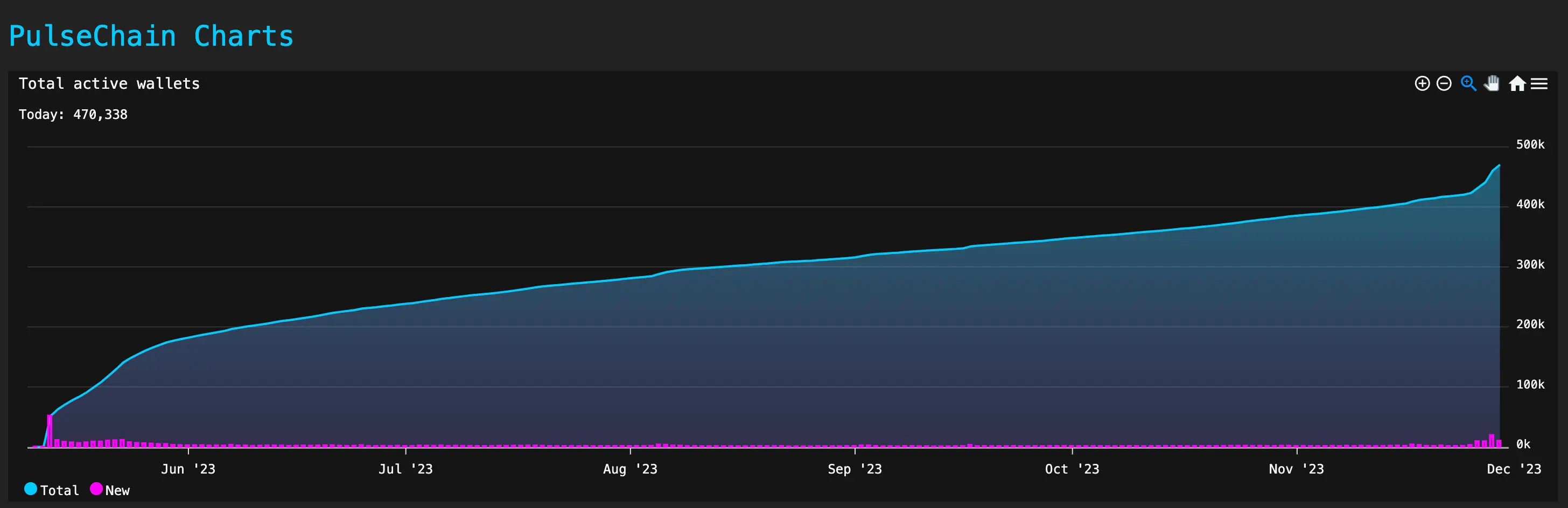
Chart as of November 2023.
Understanding PulseChain: a full-state fork of Ethereum
PulseChain is a fork of Ethereum, built to run the same code with cheaper block space. What made the launch distinctive was not the fork itself but its scope.

What the fork actually copied
PulseChain is not a simple fork of Ethereum's code; it is a copy of Ethereum's entire system state. At the fork block in May 2023, the smart contracts, the token balances and the NFTs then on Ethereum were replicated onto the new network.
For holders, this is the part worth getting right — and the original version of this article overstated it. It claimed that "all Ethereum holders received an exact duplicate of their Eth holdings" and so "automatically became a holder of an equivalent amount of PulseChain's native token". Taken literally that was true — ETH balances did carry over one-for-one as PLS — but it badly overstated what those balances were worth as a share of the new chain.
What the fork did was copy every balance — ETH (as PLS), ERC20 tokens and NFTs at the fork block, so that an address holding those tokens on Ethereum also held PRC20 copies of them at the same address on PulseChain. ETH did carry over — every address's ETH balance became the same number of PLS — but that was only about 120 million PLS out of roughly 135 trillion. Nearly all PLS was allocated at genesis through the sacrifice phase that ran in 2021, before the chain existed. And tokens held on a centralised exchange at the fork were copied to the exchange's address, not the customer's.
If you were self-custodying ERC20 tokens in May 2023, those copies are still sitting at your address today — the balance checker will show you what is there, and the full airdrop guide covers the mechanics in detail.
In retrospect
PulseChain's launch was a genuinely large technical event: a full state copy of the largest smart-contract network in crypto, executed in one shot, with an active community behind it from the first block. The activity figures in this article capture how that looked six months in, in November 2023.
Whether the network sustained that momentum is a different question, and one best answered by current data rather than a three-year-old article. For the PulseChain price, the ecosystem and everything else to do with the network, visit PulseCoinList.
Screenshot from November 2023.