
Originally published February 2024. Refreshed 20 August 2026: the app-store listings were re-checked, the token-mechanics claims were attributed to their source and dated, the return-promising language was removed, and a ticker that no longer exists was corrected. Screenshots are from the original article and are labelled as such.
The Internet Money Wallet is a multi-chain EVM wallet with native PulseChain support, built around privacy and simplicity: non-custodial, open source, no KYC, and — per its publishers — no user-data collection. It also has two tokens of its own, which is the part that needs the most careful reading.
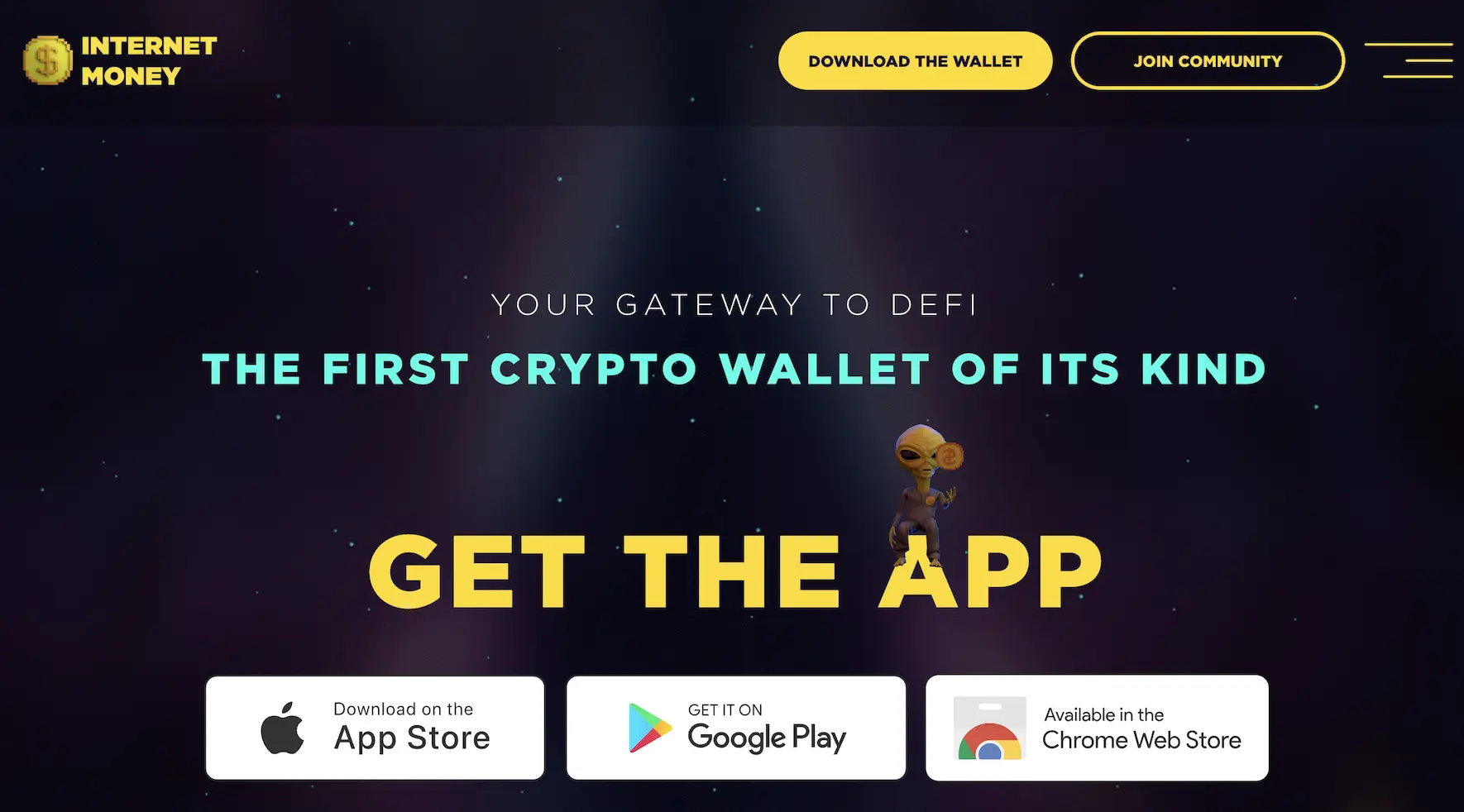
Screenshot from February 2024 — the site has changed since.
Overview
Internet Money is a wallet for Bitcoin, Ethereum and EVM chains, with PulseChain supported natively rather than as an afterthought. The pitch is a straightforward one: hold your own keys, move between chains without an account, and swap inside the app rather than bouncing out to a web dApp.
Non-custodial means what it says — you hold the keys, and nobody can recover them for you if you lose them. That is a feature and a responsibility at the same time.
Screenshot from February 2024 — the site has changed since.
Objectives and goals
The stated goal is a wallet that is simple enough for newcomers while staying private and self-custodied: send, receive, swap and track assets across EVM chains from one app.
The publishers state that the wallet collects no user data and requires no KYC. That is a claim about their practices rather than something a reader can verify from outside; if it matters to you, the wallet is open source, which means the claim is at least checkable by someone willing to read the code.
Screenshot from February 2024 — the site has changed since.
Key features
- Non-custodial, open source, no KYC, no user data collected (per the publisher).
- Native PulseChain support alongside other EVM chains, plus Bitcoin.
- In-app swaps.
- Hardware wallet support.
- Two associated tokens, TIME and IM, described below.
The two tokens — how the mechanics actually work
This is where the original article promised things it should not have, so here is the neutral version.
TIME
TIME is a fee-distribution token. Internet Money states that 100% of the fees generated by in-app swaps are distributed to TIME holders, paid in native coins of the chains involved — PLS, ETH, BNB and others. That description is the project's own, taken from its site and checked on 20 August 2026; tokenomics of this kind are set by the team and can be changed.
What that mechanism does not do is generate a return by itself. Distributions come out of swap fees, so they scale with how much volume actually flows through the wallet's swap feature. If in-app swap volume is low, distributions are low; if the fee is changed or the distribution is reconfigured, they change with it. Holding a token whose payout depends on another product's usage is an exposure to that product's usage — not a yield.
(A note on tickers: the original article listed MATIC among the coins distributed. MATIC no longer exists as an active ticker — Polygon migrated its native token from MATIC to POL in a mainnet upgrade on 4 September 2024, and by early 2025 roughly 99% of the supply had migrated. Anything describing a MATIC distribution today means POL.)
IM
Internet Money (IM) is described as deflationary digital cash for peer-to-peer payments, with no admin keys, no taxes and no reflections. Its supply mechanism is a buy-and-burn: when a swap occurs in the wallet, IM is bought on the open market and burned.
The original article said this "positively impacts its value over time". It does not follow. Burning reduces supply, and reducing supply is one input into price among many — demand, liquidity, and how much volume is actually driving the burn matter at least as much. A burn mechanism is a supply mechanism. Whether it moves a price is an empirical question with a different answer for every token that has tried it.

Screenshot from February 2024 — the site has changed since.
Getting started
The wallet is published on all three of the platforms the original article named. We re-checked each listing on 20 August 2026:
- iOS — Internet Money - Crypto Wallet on the App Store, published by Decentralized Innovations, LLC. Version 4.1, last updated 17 September 2026 (checked 28 September 2026).
- Android — Internet Money on Google Play, last updated 1 July 2026.
- Chrome — Internet Money | Crypto Wallet in the Chrome Web Store, with roughly 7,000 users at the time of checking.
All three were actively maintained as of that date, with the mobile builds updated within the previous two months.
As with any wallet: install from the official listing, not from a link in a message or a search advert, and check the publisher name before you install. Wallet impersonation is one of the more common ways people lose funds, and it costs nothing to verify.

Screenshot from February 2024 — the app has changed since.
Open source and audits
Internet Money's wallet is open source, and the project publishes an audits page at internetmoney.io/audits, which it describes as holding the full audit history for the wallet and ecosystem contracts, independently audited by third parties.
That is the project's description, and we confirmed the page exists on 20 August 2026 — we have not reviewed the audits themselves. The original article's phrasing, "fully audited", is worth retiring generally: audits vary enormously in scope, and an audit covers the code and the version that was audited, not everything a project ships afterwards. If you are relying on an audit, open it, check who performed it, what was in scope and what version it covered.
Screenshot from February 2024 — the site has changed since.
Where it fits
As a wallet, Internet Money is a reasonable fit for someone who wants PulseChain treated as a first-class chain rather than a network they have to add manually, with self-custody and no sign-up. That case stands on its own.
The token side is a separate decision from the wallet side, and it is worth keeping them separate. You can use the wallet without holding either token. If you are considering the tokens, the thing to evaluate is the swap volume flowing through the app, because both mechanisms — the TIME distribution and the IM burn — are downstream of it.
For more detail, the project publishes a "Blackpaper" and runs community channels from its official site.
Dive deeper with PulseCoinList
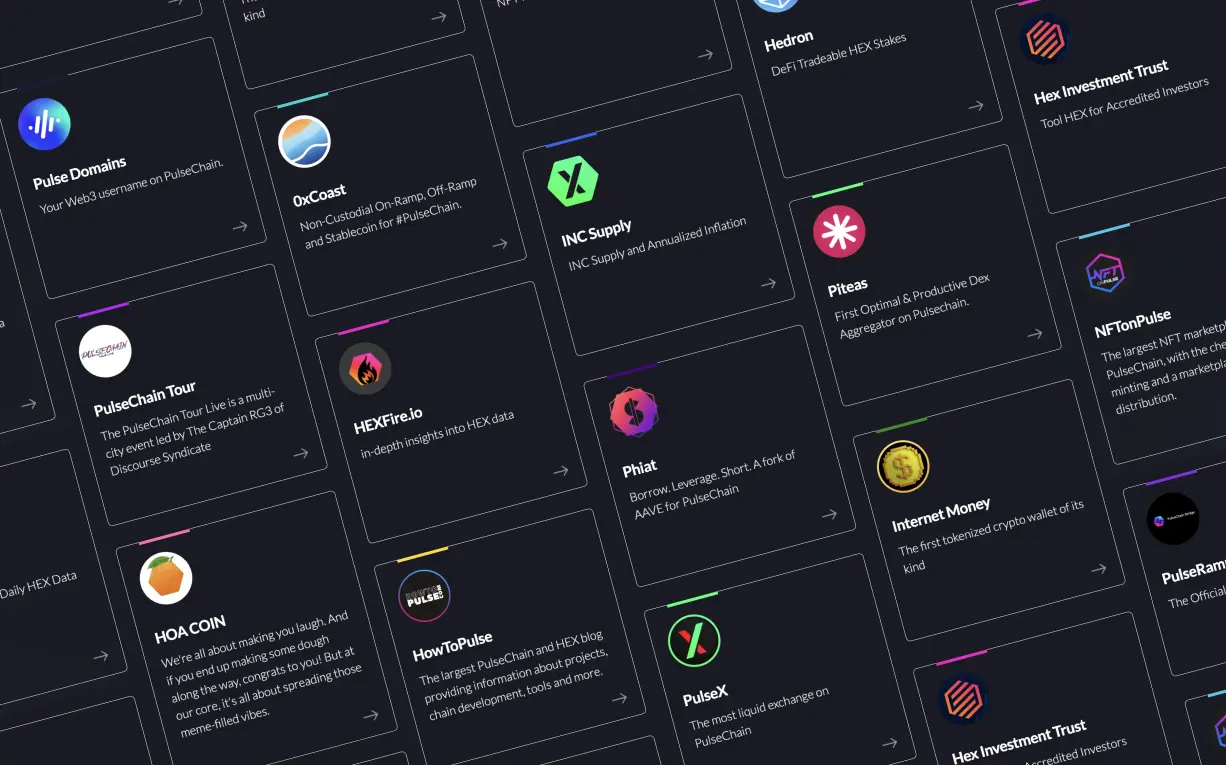
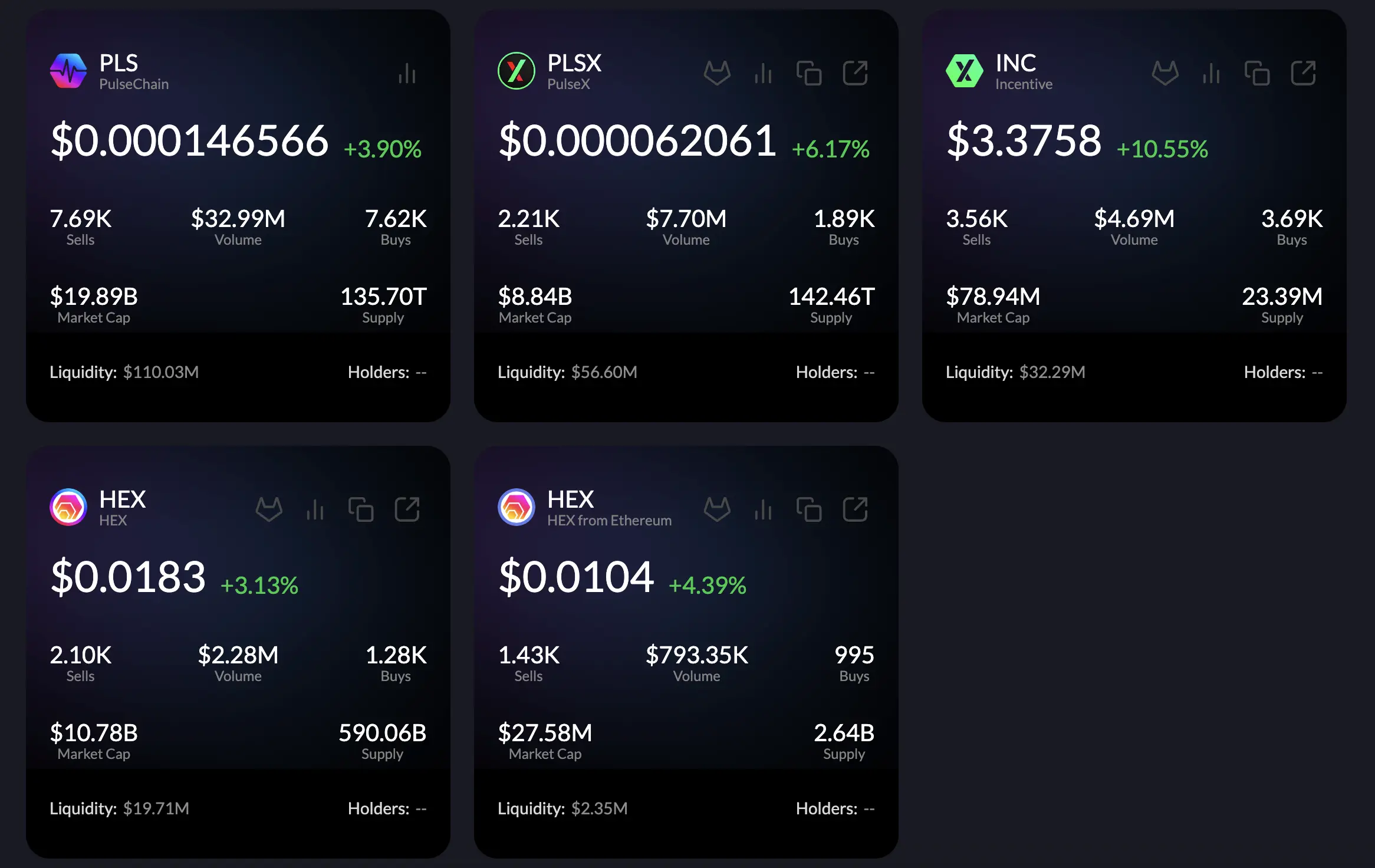
For the wider PulseChain picture — which projects are live, what each does, and live prices across the network — the PulseCoinList ecosystem directory and PulseCoinList itself are the places to look.
Screenshot from February 2024.
Frequently asked questions
Is the Internet Money wallet still available?
Yes. As of 20 August 2026 it is listed on the App Store, Google Play and the Chrome Web Store, with the iOS build updated as recently as September 2026.
Does holding TIME pay an income?
TIME receives a share of fees from swaps made inside the wallet — the project states 100% of in-app swap fees are distributed to holders. That is a fee share, not an income: it depends entirely on how much swap volume the app processes, and the distribution rules are set by the team and can change.
Is it custodial? Does it need KYC?
No to both, per the publisher. It is a self-custody wallet — you hold the keys, and nobody can restore them for you if the recovery phrase is lost.
Which chains does it support?
Bitcoin, Ethereum and EVM chains generally, with PulseChain supported natively.