
Updated 20 August 2026. This guide was originally published in January 2024 and has been rewritten to reflect that the snapshot is long closed — the practical question now is not how to qualify, but how to find copies you may already own.
The PulseChain airdrop is the largest thing most crypto holders have never checked. When PulseChain launched in May 2023, it copied the state of the Ethereum network onto a new chain. Token balances held in self-custody came along for the ride: an address holding ERC20 tokens on Ethereum at the fork block ended up holding PRC20 copies of them, at the same address, on PulseChain.
No claim page. No sign-up. No deadline. The copies were created at the fork and they have been sitting there ever since — which is exactly why so many people who qualified have never seen them.
What is PulseChain?
PulseChain is a full-state fork of Ethereum. Rather than starting from an empty ledger, it took a copy of Ethereum's entire system state — smart contracts, balances, tokens, NFTs — as it stood at the fork block in May 2023, and carried it onto a separate network. ERC20 tokens on Ethereum have PRC20 counterparts on PulseChain as a result of that copy.
(Older write-ups, including the first version of this article, described PulseChain as a fork of "Ethereum 2.0". That label was retired by the Ethereum Foundation back in January 2022 — the correct terms today are Ethereum's execution layer and consensus layer. PulseChain forked Ethereum, full stop.)
PulseChain launched with a native token supply many orders of magnitude larger than Ethereum's, and low transaction costs are one of its stated design goals. It is worth separating those two facts, because they get conflated constantly. A larger token supply does not by itself make a chain cheap to use — fee levels come from block space, demand and the fee market. What the large supply does mean is that fees end up quoted in very small fractions of a PLS-denominated unit.
It is also a separate network with its own validator set. It inherits Ethereum's code and its state; it does not inherit Ethereum's security or its decentralisation.
The airdrop was a one-time snapshot — and it has already happened
This is the part that trips people up. The airdrop was not an ongoing programme and it is not something you can become eligible for now. It was a single snapshot taken at the fork block in May 2023:
- If you held ERC20 tokens in a wallet you controlled at that moment, PRC20 copies exist at that same address on PulseChain today.
- If you bought those tokens after the fork, there is no copy — the snapshot had already been taken.
- If your tokens were sitting on a centralised exchange at the time, the copy landed at the exchange's address, not yours. What the exchange chose to do with it was up to the exchange.
Buying tokens today does not create copies. Nothing you do in 2026 changes what the snapshot recorded in 2023.
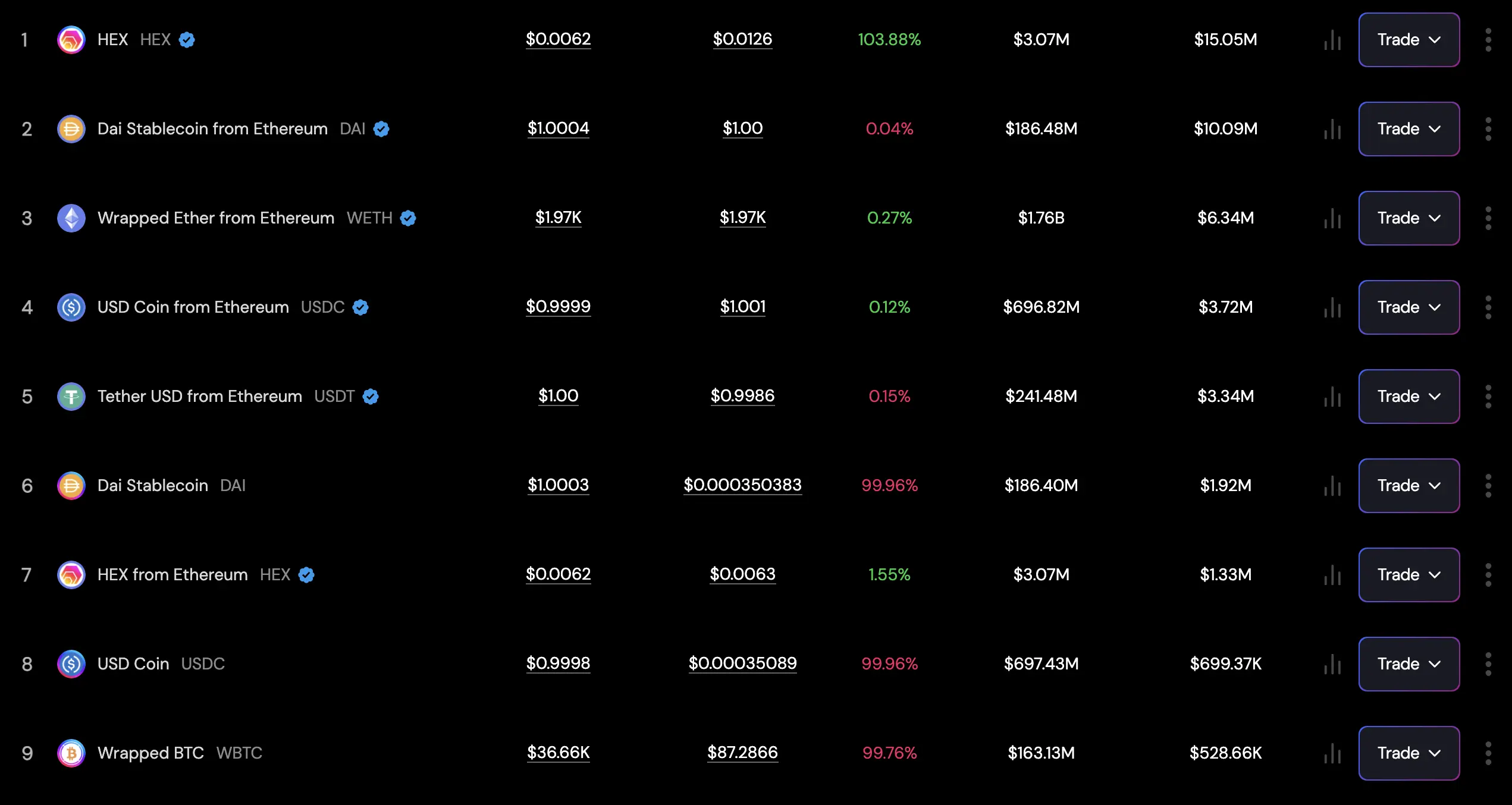
Screenshot from January 2024 — the interface has changed since.
Checking what's at your address: a step-by-step guide
Because there is nothing to claim, checking is a read-only exercise. Head to the PulseCoinList balance checker and:
- Paste in the address you held your ERC20 tokens in back in May 2023 — the field accepts a PulseChain address, an Ethereum address or a .pls name.
- The checker reads that address's PulseChain-side balances and shows you what is there, with current values where the tokens have a market.
The tool does not ask you to connect a wallet or sign anything, and it cannot move funds. That matters, because it also gives you a rule of thumb for spotting fakes.
A word on scams. Since there was never anything to claim, any site that asks you to connect a wallet, sign a message, or pay a fee to "unlock", "claim" or "activate" your PulseChain airdrop is not doing you a favour. The copies are already at your address; the only thing you need in order to use them is the private key you already have.
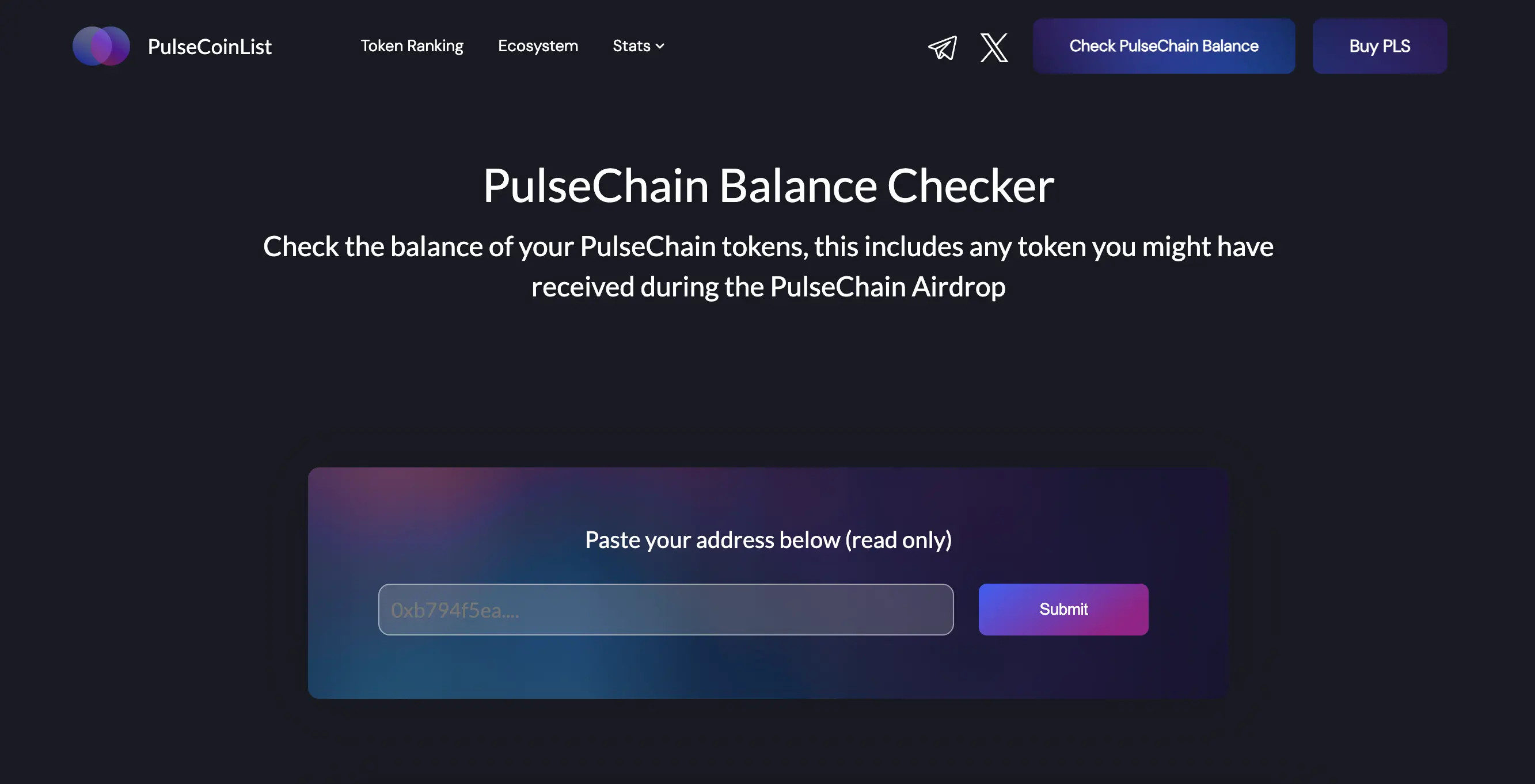
Screenshot from January 2024 — the interface has changed since.
PulseChain for beginners: learn and explore
If you are new to the network — or you have just discovered a balance you did not know about — PulseCoinList carries an FAQ section covering the basics: what the fork copied, how PRC20 tokens relate to their Ethereum originals, and how to get set up on the network in the first place.
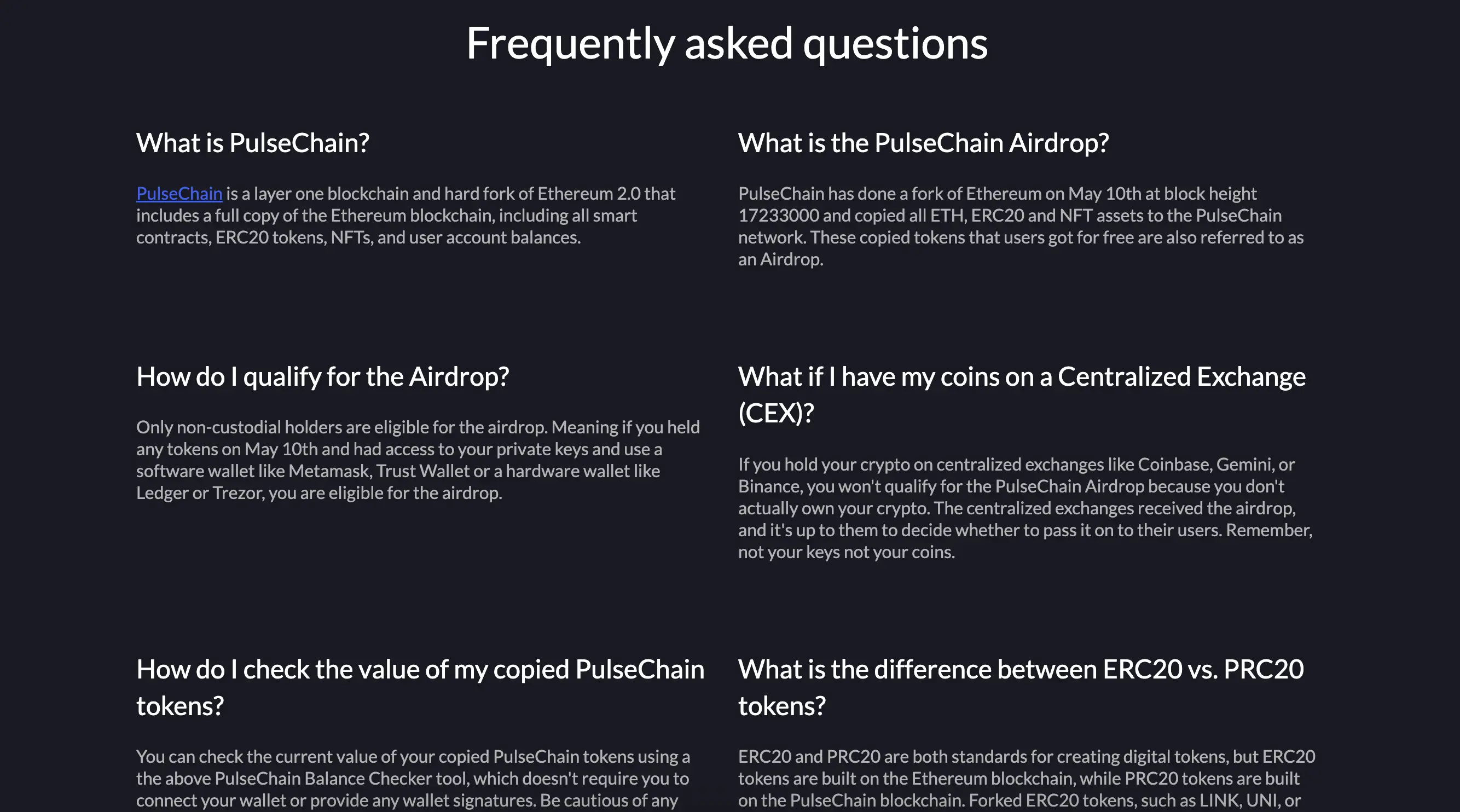
Screenshot from January 2024 — the interface has changed since.
Beyond checking balances: a full ecosystem guide
Balance checking is a starting point rather than the whole story. PulseCoinList tracks the PulseChain token universe alongside live stats and an ecosystem directory of the projects building on the network, so you can go from "there's something at my address" to "here's what it is and where it trades" in the same place.
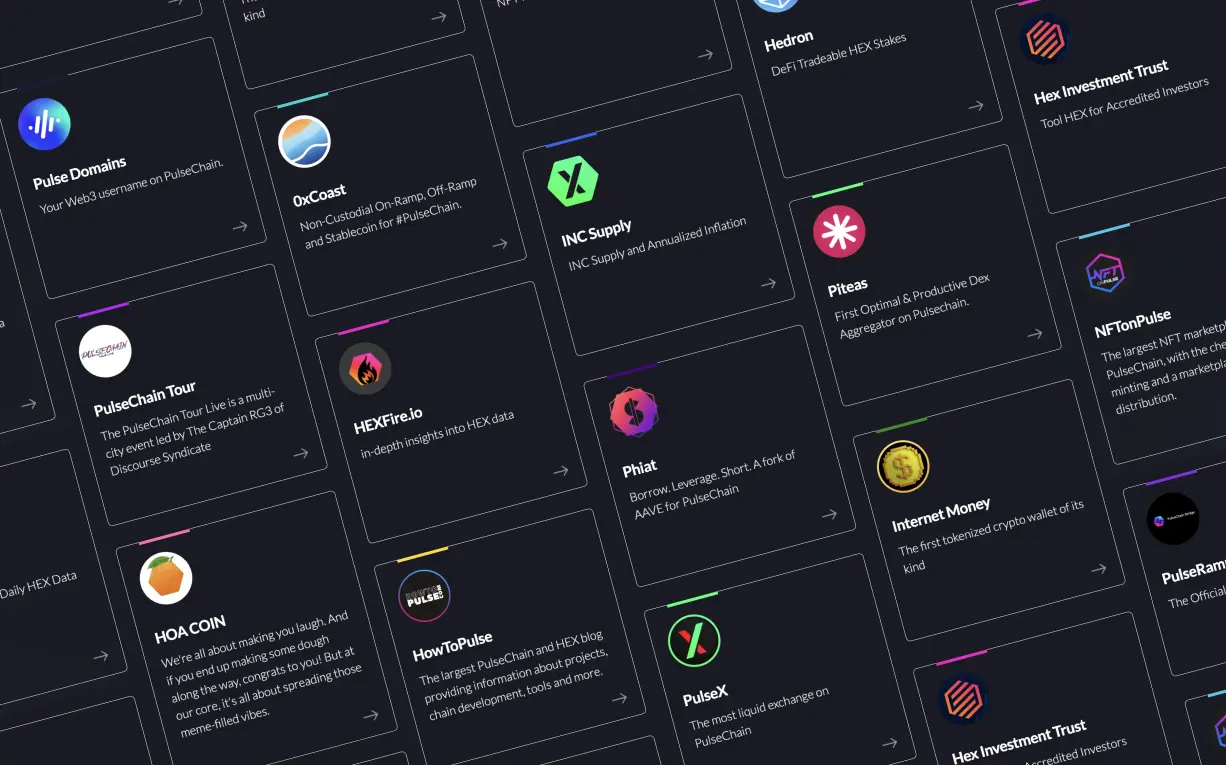
What are the copies actually worth?
Honestly: it depends entirely on the token, and for a lot of them the answer is very little.
A PRC20 copy is a copy of the token contract and balance, not of the project behind it. The original team is under no obligation to support their token on PulseChain, and most never did. A copy is worth something only where a market exists for it on PulseChain — where there is liquidity, and where enough people want it to price it.
So the honest expectation to set is a wide one. Some addresses turn up copies with real, tradeable value. Many turn up a long list of names with no meaningful market behind them. The only way to know which you are looking at is to check.
Adoption and awareness: the drivers of value
The broader value of PRC20 tokens tracks the health of PulseChain itself — how much liquidity sits on the network, how many projects actively support their PulseChain-side tokens, and how many people are using the chain day to day. Where PulseChain finds genuine use, its copied tokens have somewhere to trade. Where it does not, a copy stays a line item.
Staying informed: PulseChain price and more
To keep an eye on the PulseChain price and the wider market, PulseCoinList carries live stats and the ecosystem guide in one place.
In summary: the PulseChain airdrop was a single event in May 2023, not an open offer — but that event left real balances at real addresses, and a great many of them have never been looked at. If you were holding ERC20 tokens in your own wallet back then, the five minutes it takes to check your address is the entire cost of finding out.